Story from the Vault
We3 (2004)
16 May 2026 · DC Comics
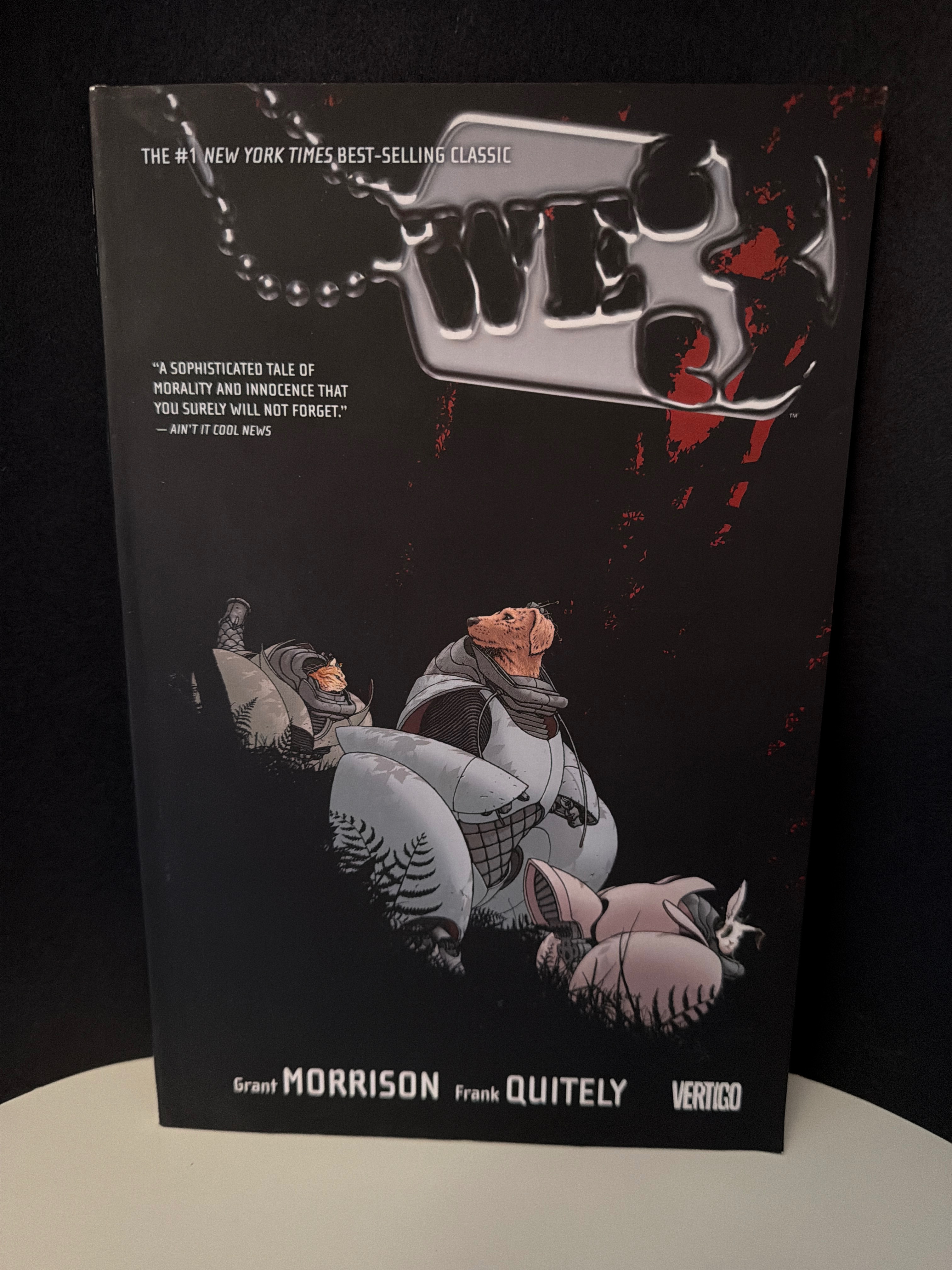
Among the marvels and eccentricities the comic world has shepherded through its storied corridors, We3 stands apart, both for its unorthodox narrative and the ethereal brush of its art. When you read it you can't help but feel a jolt, a mix of wonder and disquiet. The cover isn't just a prelude, it's a promise: artifacts of warmth and peril entwined as one, held in a triad by the weary-yet-defiant eyes of its animal protagonists.
Publication and Context
Unleashed in 2004 under the imposing banner of DC Comics' Vertigo imprint, We3 came into the scrambling energy of a post-9/11 world, a time when stories of identity, control, and ethics were finding fervor. Vertigo, renowned for brooding and border-pushing content, provided the perfect home for this three-issue mini-series. This wasn't merely a blip in the comics cosmos, but a testament to the provocative storytelling that defined early 21st-century graphic narratives.
The Creative Powers Behind We3
At the heart of We3 are the minds of Grant Morrison and Frank Quitely, a collaboration that's sung through the ages. Morrison, with his affinity for bending reality and fringes of philosophical inquiry, paired with Quitely’s unique artistry, yields a synthesis that is both visually arresting and intellectually stimulating. Their dynamic was already well-proven in works like New X-Men, but We3 pushed them into a realm of storytelling that blurred lines in more visceral and minimalist ways.
Jamie Grant’s digital inks and colors complement Quitely’s line work with a precision that defies the static nature of the comics medium, adding a kinetic energy that feels palpably alive. Todd Klein’s lettering shouldn’t be understated either, as it provides that necessary breath (or cessation of it) to navigate this emotional juggernaut.
Embarking on a Relentless Journey
The narrative follows the titular WE3, a triad of animal weaponry forced into exile by the military that created them. There’s Bandit, the loyal dog; Tinker, the scrappy cat; and Pirate, the affable rabbit. Unlike traditional animal tales, these characters are laden with emotional weights highlighted by mechanized augmentation, animals poised between their primal instincts and enforced duty. It is less a journey about escape and more a meditative narrative on autonomy and the cost of war.
The plot doesn’t meander. Every panel brims with tension and purpose, and the artful way Morrison and Quitely unveil the story makes each page turn urgent and vital. The heart of We3 beats at the intersection of cruelty and care, exploring what it means to act out agency against overwhelming odds.
Legacy and Impact
The reception of We3 was anything but muted, instantly garnering a reputation for its innovative storytelling and emotional resonance. Fans and critics alike lauded it, carving a prestigious niche among graphic literature in the more serious, socially aware classification. For collectors, it represents not simply a moment in time, but an ongoing conversation about the scope and power of comics as a medium. It's often sought after for its artistry and compelling narrative blend, a tangible relic of modern comic ingenuity.
Twenty years later, We3 continues to ignite discussions on the interplay between humanity and its creations, a testament to a truly unique narrative voice in the graphic novel domain.
To sit down with We3 is to engage in a rare comic experience, a story that, while brief, packs the punch of a lengthy epic. Readers are invited to explore this potent mix of visual and narrative art, understanding that sometimes, the smallest stories create the most resounding echoes.